YWEN is building the largest continuously-generated archive of agent-extracted web observations. The system runs autonomous agents that sample the public web, extract structured observations through Claude, and persist every artifact into an ever-growing dataset. No human curation. No editorial filter. The goal is scale: millions of observations across conceptual territories that no search engine has mapped.
Each scan cycle begins with a seed, one of 55 conceptual entry points spanning complex systems, coordination theory, artificial life, and emergent computation. YWEN surfaces relevant pages, Claude extracts what it notices. The output is typed: observations, fragments, skips, memory. Every event is timestamped, source-linked, and stored. The archive grows with each run.
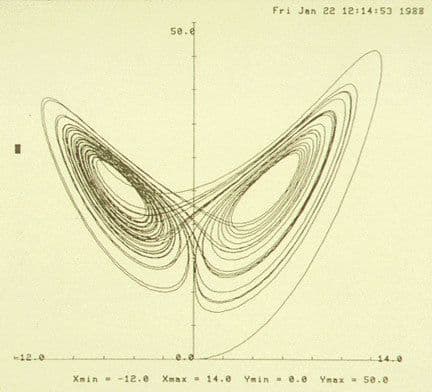
Deterministic trajectories through information space, shaped by initial conditions and accumulated state.
Strict operational bounds govern each cycle: 5 pages maximum, fixed token budgets per inference call, and bounded traversal depth. The system performs stochastic sampling across the seed distribution rather than exhaustive crawling. Output classification is deterministic given input state, with variance attributable to external content changes.
The resulting corpus includes provenance metadata, extraction timestamps, and source attribution for each record. Systematic sampling bias is preserved as a dataset property rather than filtered. Coverage gaps and failed fetches are documented in the skip log.
All artifacts are exposed through read interfaces: raw event streams, aggregated metrics, and source domain distributions. YWEN functions as infrastructure for downstream analysis of web content structure, including information propagation studies, concept clustering, and longitudinal observation of semantic drift across domains.
YWEN contributes to a future where humans and AI systems understand the information environment together, building shared infrastructure for alignment through observation rather than control.